
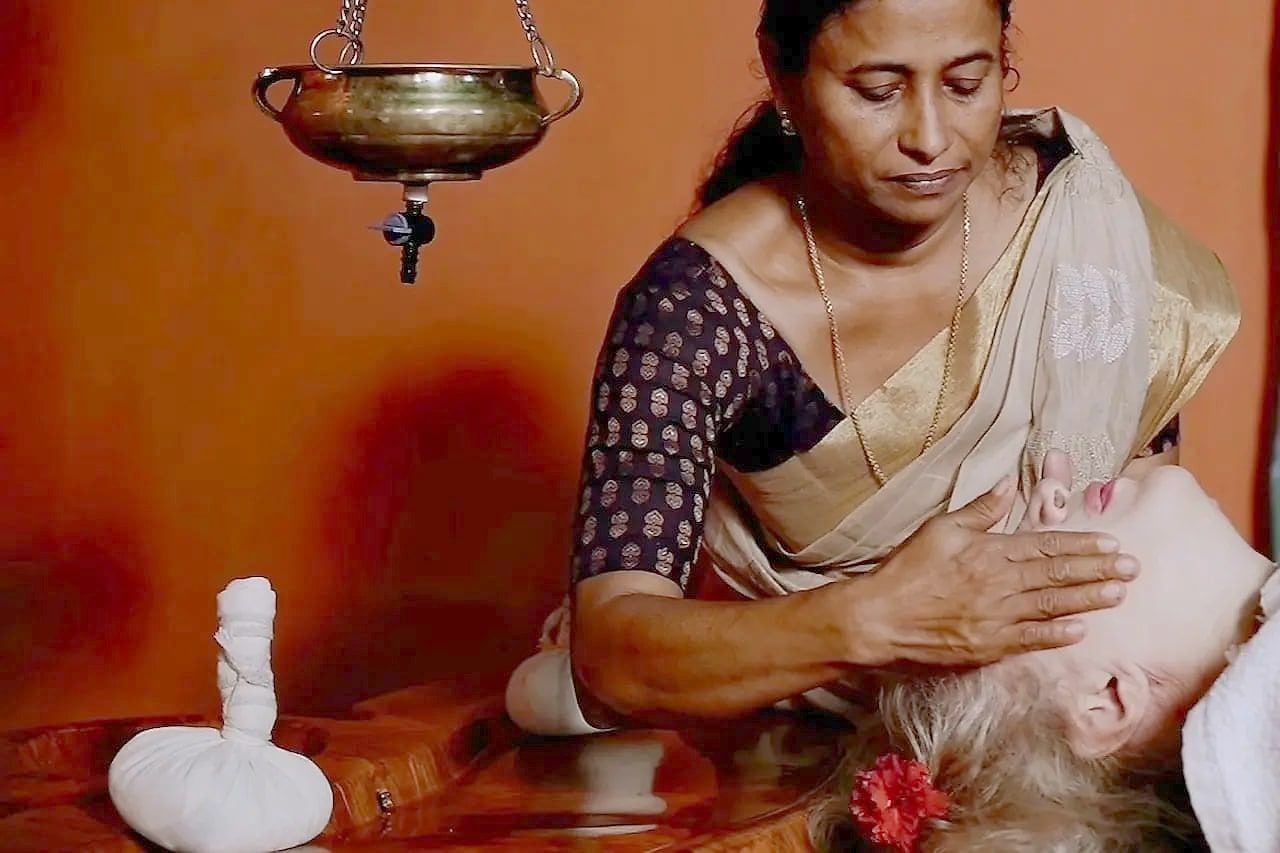
Panchakarma
What Is Panchakarma? A Plain-English Guide
Panchakarma is neither a single treatment nor a spa package but a doctor-led program in three stages: preparation, cleansing procedures and a return phase. What the word means, what determines the length and why a doctor is needed.
What the word “panchakarma” means
Panchakarma is Sanskrit for “five actions”. In ayurveda it is the name for a group of cleansing procedures and, more broadly, for the doctor-led program built around them. It is not a single treatment, nor a type of massage. It is a course of several stages, prescribed and supervised by a doctor.
At its root is the ayurvedic idea of the three doshas — vata, pitta and kapha. According to the classical texts, when a dosha builds up beyond measure and digestion weakens, ama forms in the body — undigested residue; this is explained in detail in the article on agni and ama. Cleansing procedures are conceived as a way of removing the excess dosha by the route closest to it.
The five actions: what is on the list
Modern textbooks and clinic websites most often give this list:
- Vamana. Therapeutic emesis, induced according to a medical protocol. According to the texts it is used for kapha disorders.
- Virechana. Purgation of the bowel with laxative remedies. According to the texts, for pitta disorders.
- Basti. Medicated enemas with herbal decoctions or oil. According to the texts, the main method for vata disorders.
- Nasya. Administration of oils or powders through the nose. In the Charaka Samhita this group of procedures is called cleansing of the head.
- Raktamokshana. Bloodletting; today it is more often done with leeches.
The lists vary between sources. In the Charaka Samhita, in the chapter on the five procedures, they are emesis, purgation, two kinds of enema — with decoction and with oil — and cleansing of the head. Bloodletting is not on that list.
What matters more is that the whole set is rarely used in one program today. Each procedure has a long list in the texts of people it doesn’t suit, and vamana and bloodletting require special indications and conditions. What goes into your program is decided by the doctor after an examination.
The three stages of the program
The classical program has three parts. None of them can be skipped.
- Purvakarma — preparation. First the doctor prescribes remedies that support agni, the digestive fire. Then comes snehana, oleation: taking ghee or a medicated oil internally in rising doses, and oil massage externally. According to the Charaka Samhita, snehana lasts three to seven days. It is followed by svedana, heat therapy, which, according to the text, softens and mobilizes what is to be removed. Throughout this time the person eats simple warm food. External preparatory treatments include, for example, abhyanga.
- Pradhanakarma — the main procedures. Virechana takes one day; a course of basti takes a week or longer. On that day the doctor watches the person and assesses how complete the cleansing was: strong, moderate or weak. This assessment determines what the return phase will look like.
- Paschatkarma — the return phase. This is a step-by-step diet: from thin rice water to thick porridge, then to a lentil soup, and only then to ordinary food. The Charaka Samhita compares digestion after cleansing to a spark that is fanned into a steady flame by adding dry grass a little at a time. For the duration of the program the text also prescribes a regimen: no long rides or long conversations, no daytime sleep, chill, strong sun, anger or worry. After the return phase the classics place a separate strengthening branch, rasayana: cleansing first, then strengthening.
Why 7, 14, 21 or 28 days
The lengths follow from the arithmetic of the stages. A typical course with virechana is scheduled like this: two to three days of digestive remedies, three to seven days of taking ghee, three days of oil massage with heat therapy, the day of virechana itself, and three to seven days of the post-cleansing diet. Altogether that is twelve days to three weeks for one main procedure. A basti course may include, for example, sixteen enemas.
Hence the familiar grid of lengths:
- 7 days. A full cycle doesn’t fit into a week. This means preparation, external treatments and, if the doctor sees fit, gentle cleansing; the person goes through the return phase at home, following the doctor’s recommendations.
- 14 days. One cycle with one main procedure, at the lower limit of the classical timeframes.
- 21 days. The same cycle without rushing: full preparation and a return phase under the doctor’s supervision, rather than on a plane.
- 28 days. Long enough for an extended basti course, or two main procedures with a break between them. The classical text also requires a break between courses.
Longer doesn’t mean better. The doctor chooses the length and intensity according to the person’s condition, age and strength. How this grid of lengths looks at the school and in which locations programs run is on the Panchakarma in India page. For some people the classical texts don’t recommend cleansing procedures at all — that is the subject of the last section.
The doctor’s role
Panchakarma is prescribed and supervised by an ayurvedic doctor. The therapist performs the treatments with their hands but doesn’t choose them.
- Before starting. An examination, questions, a list of diagnoses and medications. Based on this the doctor decides whether the program is indicated, which procedures it will include and at what intensity.
- Every day. During snehana the dose of ghee is adjusted according to how the person digested the previous one. The texts list the signs of sufficient, insufficient and excessive oleation and cleansing, and the doctor goes by these.
- On the day of the main procedure. The doctor stays close, because this is when complications are possible: dehydration, weakness, dizziness.
- During the return phase. The doctor plans the diet day by day and says when to go back to ordinary food, exercise and work.
Why it isn’t a weekend detox or a spa package
- Without a doctor it isn’t panchakarma. A combination of massage, herbal tea and a vegetarian menu can be a pleasant break, but it has nothing to do with a doctor-led program.
- One program for everyone is impossible by design. Procedures, doses and timing depend on the person. An identical package for a whole group is a sign that there was no examination.
- Oil treatments are only part of the preparation. Abhyanga or shirodhara on their own don’t make up panchakarma. Much of what is sold online under that name doesn’t include the five cleansing actions at all: it is a combination of Ayurvedic treatments — massages, heat therapies, shirodhara. What other ayurvedic treatments exist and how cleansing differs from oil and heat treatments is covered in Ayurvedic treatments.
- It is demanding, not restful. A purgative, enemas, a restricted diet and several days of weakness are not something to squeeze in between a flight and Monday morning. The return phase takes as much attention as the procedures themselves. If what you are looking for is not a doctor-led program but a pause from everyday life, the different kinds of such trips and how they differ are explained in What is a retreat.
- Shatkarma from yoga isn’t panchakarma either. The six cleansing actions of hatha yoga are part of yoga practice, not a doctor’s prescription; the two lists share only one name, basti, and it means something different in each. This confusion is untangled in Ayurveda and yoga.
- “Ayurvedic detox” is not a promise to flush out toxins. Panchakarma is often called that, but the tradition speaks of removing excess dosha, not of some kind of toxins. In detail in Ayurvedic detox: what it really is.
Panchakarma at home: what you can do
People often search for “panchakarma at home” or “how to do panchakarma at home step by step”, and the honest answer is short: panchakarma itself can’t be done at home. Its core is the cleansing procedures — virechana, basti, nasya, vamana. Each is prescribed by a doctor after an examination, and the doctor also sets the dose and watches over the person on the day of the procedure. Without that, what is left is not panchakarma but self-treatment, with the very complications the doctor stays close by to handle on the day of the main procedure: dehydration, weakness, dizziness. The same goes for the preparation: taking ghee internally in rising doses is part of a medical protocol, not a home recipe.
What belongs at home is something else — what the classical texts count not as treatment but as everyday self-care. Step by step, starting simple:
- Daily routine. Go to bed and get up at the same time, eat at the same hours. This is where dinacharya, the ayurvedic daily routine, begins.
- Simple warm food. Freshly cooked, nothing heavy or cold — the same kind of food the preparation at a clinic starts with. The rules are in the article on the ayurvedic diet.
- Self-massage with warm oil. A short abhyanga before your shower with plain sesame oil is part of the daily routine, not a therapeutic procedure; the same article explains when oil massage is not done.
- A seasonal routine. Food and routine change with the time of year — see the article on ritucharya.
None of this replaces cleansing or pretends to be it: it is a routine that is beneficial even without a program, and one the doctor will ask you to keep before and after it anyway. If cleansing is needed, there is only one way — an in-person consultation with a doctor. Two parts of the program really are done at home: the weeks of preparation before the trip and the return phase after it, following the doctor’s recommendations — see the article on preparation and aftercare. The procedures themselves take place in a clinic: that is how Ayurvedashala’s programs are built — panchakarma in India with a doctor’s examination and supervision.
Who panchakarma doesn’t suit
The classical texts don’t recommend cleansing procedures for pregnant women, children, the very old, the emaciated and the weak, or during acute fever; according to the Charaka Samhita, vamana is also unsuitable in heart disease. Modern clinics add breastfeeding, acute infections and recent surgery. Prescribed medication must not be stopped on your own: show the list to the doctor before you arrive. Medicines taken internally — only as prescribed by a doctor and from a reputable manufacturer.
A detailed breakdown is in the article on who panchakarma suits and who should not have it. The weeks before and after the program are covered in the article on preparation and aftercare. This article does not replace a doctor’s consultation: the decision about panchakarma is made at an in-person consultation, not from a description on the internet.
Sources
- Charaka Samhita, Siddhi Sthana, chapter 2 'Panchakarmiya Siddhi': who the five procedures are indicated for and who they don't suit (Charak Samhita Online)
- Charaka Samhita, Siddhi Sthana, chapter 1 'Kalpana Siddhi': snehana, svedana, the post-cleansing diet and restrictions (Charak Samhita Online)
- Charak Samhita Online — 'Dinacharya': the daily routine and daily practices according to the Charaka Samhita, Sushruta Samhita and Ashtanga Hridaya
Frequently asked questions
Is panchakarma a massage?
No. Oil massage and heat therapy are part of the preparation stage, but panchakarma itself is a doctor-led program with cleansing procedures and an essential return phase. The content of the program is decided by the doctor after an examination.
How many days does panchakarma take?
Usually 7 to 28 days. A full cycle with one main procedure — preparation, cleansing and return — takes roughly two to three weeks, so a one-week program is always a shortened one.
Are all five procedures done during panchakarma?
As a rule, no. Each procedure has a long list of restrictions in the classical texts, and the doctor chooses one or two main ones that suit the particular person.
Can I do panchakarma at home?
No: there is no such thing as home panchakarma. Cleansing procedures and taking ghee in rising doses should not be done without a doctor — they require an examination, dose adjustment and supervision. What belongs at home are the gentle parts of the daily routine: regular sleep and meals, simple warm food, self-massage with warm oil, plus preparation and aftercare following the doctor's recommendations.
Message us
We reply personally, tell you more and help you choose the program and dates. The message is pre-filled — just press Send.
We usually reply within a few hours.