
Basics
Vata Dosha: Signs, Diet and Daily Routine
Vata is the dosha of movement: everything in the body that moves belongs to it in ayurveda. It is light, dry, cold and mobile, and it is the first to go out of balance — through rush, lack of sleep and travel. The signs of a vata constitution, the signs of aggravated vata, and what brings it back into balance: tastes, routine and warm oil.
What is vata
Vata is one of the three doshas of ayurveda, the principle of movement. Everything in the body that moves belongs to it in ayurveda: breathing, circulation, the workings of the nervous system, the movement of food through the gut, speech, thought, childbirth. The name comes from a Sanskrit root meaning “to move” or “to blow”.
We have written about the three doshas as a whole separately, in The three doshas: vata, pitta, kapha. Here we look at vata in detail: how to recognize it, what throws it off balance and what brings it back.
One important point first. The doshas are a model of traditional medicine, not a concept of modern physiology. No lab test will show your vata. What follows is how the classical texts describe it and how an ayurvedic doctor works with it.
The qualities of vata and where it lives
Vata is made of two elements, air and space. From them it inherits its qualities, and all work with vata is built on them:
- Light — a slim body; weight is hard to gain.
- Dry — dry skin, lips and hair, a tendency to constipation.
- Cold — cold hands and feet; cold is harder to bear than heat.
- Rough — cracked skin, cracking joints.
- Mobile — quick movements, quick speech, changeable moods.
- Subtle — it gets everywhere, which is why vata shows up throughout the body at once.
According to the texts, vata’s main seats in the body lie below the navel: the large intestine, lower back, hips, bones, skin and ears. The large intestine is considered its principal seat, which is why vata disorders often start with digestion.
The rule on which all work with the doshas rests: like increases like, opposites balance. Cold, dry, mobile vata is calmed by what is warm, oily and steady — warm food, a regular routine and warm oil. The same rule lies behind the choice of oil for a treatment: more in Oils for ayurvedic massage.
What a person with predominant vata looks like
A portrait of the vata constitution from the classical descriptions and textbooks:
- Build. Slim, with visible bones and joints; weight comes and goes easily.
- Skin and hair. Dry, thin skin, cool to the touch; dry hair, often curly.
- Digestion. Irregular: a big appetite one day, none the next. A tendency to bloating.
- Sleep. Light and broken; thoughts get in the way of falling asleep.
- Movement and speech. Quick and light; lots of gesturing.
- Mind. Picks up new things fast and forgets them just as fast. Good at starting, harder at finishing.
- Under pressure. Anxiety and restlessness come first, rather than irritation or apathy.
Pure types are rare: most people show two doshas. How your inborn constitution differs from your current state is explained in Prakriti and vikriti.
When vata goes out of balance
It is important not to mix up two different things. A vata constitution is what a person is born with; it is not treated and does not change. Aggravated vata is a current state, and it can arise in anyone, regardless of constitution.
How an ayurvedic doctor describes aggravated vata:
- dry skin, lips and mouth;
- bloating, rumbling, irregular bowel movements;
- light sleep, difficulty falling asleep;
- restlessness, anxiety, scattered attention;
- feeling chilly, cold hands and feet;
- cracking and discomfort in the joints, stiffness;
- tiring quickly despite outward liveliness.
The texts describe this process in stages: first the dosha accumulates, then it becomes aggravated and starts producing symptoms. The point of the ayurvedic routine is to step in at the first stage, before there are any complaints.
What increases vata
According to the Charaka Samhita and the textbooks, vata is increased by everything dry, cold, light and mobile:
- Food. Dry and cold food, raw vegetables, unsoaked dried fruit, fizzy drinks, eating on the run and irregular meals.
- Rhythm. Too little sleep, late nights, getting up at different times, juggling many tasks at once.
- Travel. Flights, crossing time zones, long bumpy journeys — the classic example of “vata aggravated by movement”.
- Weather. Wind, cold, dry air.
- Mind. Anxiety, fear, overload of news and conversation.
The most common example discussed on our courses: someone flies a lot, eats on the run and sleeps five hours a night. A month later they come in with dryness, bloating, insomnia and anxiety — and that is described as aggravated vata.
Diet for vata
The general principle: warm, moist, oily, cooked, and at the same times every day. Of ayurveda’s six tastes, vata is balanced by sweet, sour and salty; bitter, pungent and astringent increase it.
What is usually advised for aggravated vata:
- warm cooked food instead of raw and cold;
- enough oil or ghee on your plate;
- warming spices — ginger, cumin, fennel, asafoetida;
- warm drinks through the day;
- regularity: three meals at roughly the same times.
What to avoid: cold food straight from the fridge, dry snacks without a drink, too many raw salads, coffee on an empty stomach, skipped lunches.
Why irregularity hits vata in particular is explained by the idea of the digestive fire — see Agni and ama. The general rules of eating by dosha are covered in The ayurvedic diet. An individual diet is prescribed by a doctor after an examination: it can’t be put together from a text on the internet.
Daily routine and lifestyle
For vata, routine matters more than any single treatment, because its main problem is inconsistency:
- get up and go to bed at the same time, asleep by 10–11 pm;
- a warm shower or bath; dress warmly in wind and cold;
- self-massage with warm oil in the morning;
- calm movement — walking, gentle yoga — instead of exhausting workouts;
- fewer screens and less news in the evening;
- quiet and a predictable day as medicine, not as boredom.
How ayurveda structures the whole day is covered in Dinacharya: the ayurvedic daily routine.
Treatments prescribed for vata
In a clinic, treatments with warm oil are prescribed for vata conditions more often than any others — by the same rule of opposites:
- Abhyanga — a full-body massage with warm oil; for vata this is the main treatment.
- Shirodhara — a thin stream of warm oil on the forehead; traditionally chosen for light sleep and restlessness.
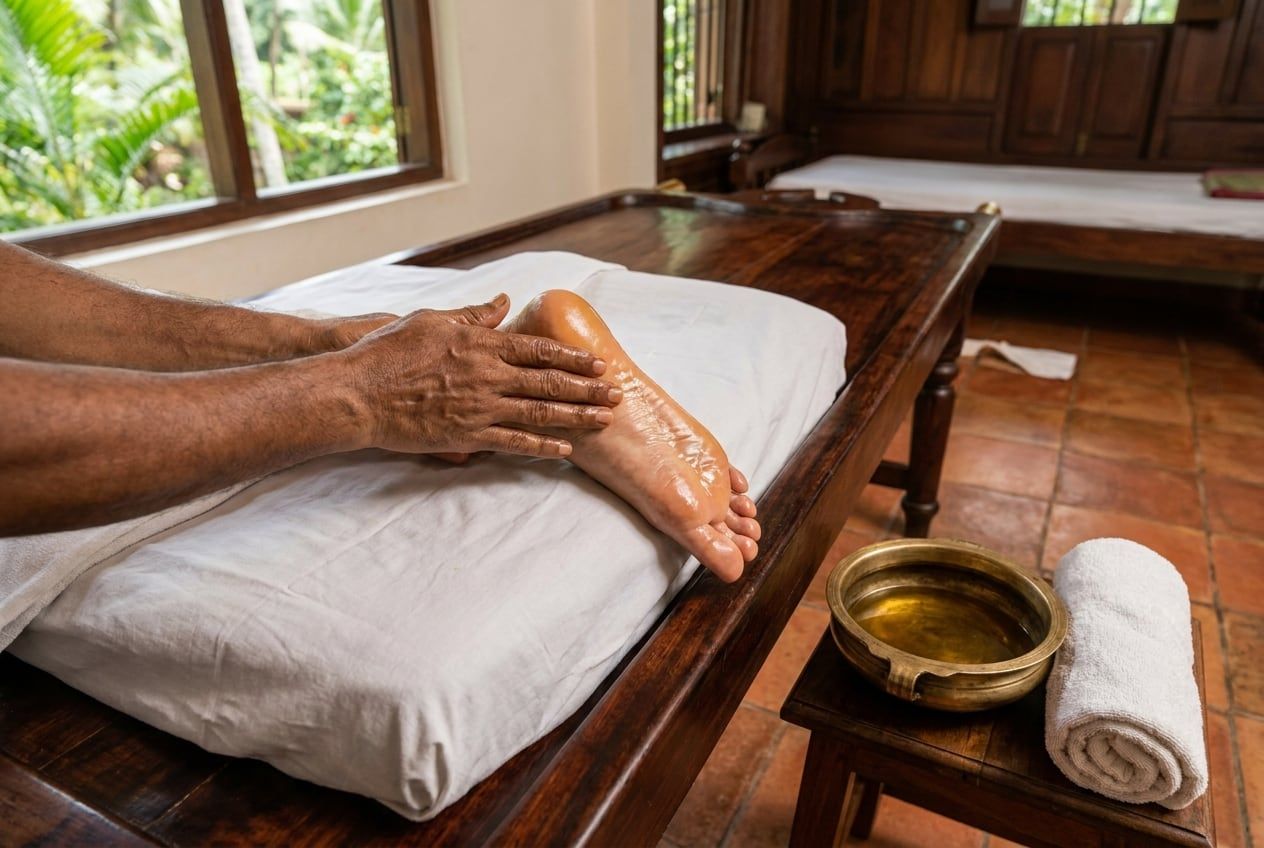
- Oil on the feet and head — a short daily practice that the texts single out for dryness, fatigue and poor sleep.
- Pizhichil — pouring generous amounts of warm oil over the body, a clinic-level treatment.
Treatments are prescribed by a doctor after an examination, taking contraindications into account. Oil treatments are not given during a fever or acute infection, with indigestion or nausea, on damaged skin, and in pregnancy only as prescribed by a doctor.
Season, age and time of day
Vata follows cycles, and ayurveda takes them into account:
- Time of day. Vata predominates at the end of the day and in the hours before dawn — hence evening restlessness and waking around four in the morning.
- Season. According to the Charaka Samhita, vata accumulates in summer and becomes aggravated in the rainy season; in a northern climate its season is the dry, cold autumn and early winter.
- Age. Old age is considered the time of vata: dryness, cracking joints and light sleep are its age-related signs.
That is why the same person receives different recommendations in autumn and in spring, and seasonality is an ordinary part of the ayurvedic routine.
What this article can’t do
This article does not replace a consultation. You can’t determine your own constitution from a description of signs, let alone prescribe yourself treatment: similar complaints — dryness, insomnia, bloating — occur in conditions that have nothing to do with ayurveda and need an ordinary doctor.
Medication prescribed by a doctor is not stopped for ayurvedic reasons.
If you’d like a first idea of your constitution, the dosha test takes a few minutes. It shows how you see yourself rather than a diagnosis, but it is a handy place to start the conversation.
Sources
Frequently asked questions
How do I know if I have a vata constitution?
Reliably, only at a consultation with an ayurvedic doctor, who reads the pulse, looks at the tongue and build, and asks detailed questions. The signs in this article give you an idea, but an inborn constitution is not determined from them.
What is the difference between a vata constitution and aggravated vata?
Constitution is the inborn balance of the doshas, and it doesn't change. Aggravated vata is a current state: dryness, bloating, light sleep, anxiety. Vata can become aggravated in a person of any constitution.
What diet suits vata?
According to the classical texts, vata is balanced by warm, moist, oily food and by the sweet, sour and salty tastes. Dry, cold and raw food and eating on the run increase vata. An individual diet is prescribed by a doctor.
Which treatments are prescribed for aggravated vata?
Most often treatments with warm oil: abhyanga, shirodhara, oil on the feet and head. They are prescribed by a doctor after an examination, taking contraindications into account.
Is vata bad?
No. There is no good or bad dosha. Vata is responsible for movement, breathing and the workings of the nervous system: without it the body doesn't function. The point is not to get rid of it but to keep it in balance.
Message us
We reply personally, tell you more and help you choose the program and dates. The message is pre-filled — just press Send.
We usually reply within a few hours.