
Treatments
Ayurvedic Massage: What It Is, Types and How It Differs
Ayurvedic massage is work with warm oil chosen for a person's condition. It is calmer than classic massage, follows its own rules and is not given in a whole range of conditions. We cover the types, how a session goes and how to tell a genuine treatment from an oil massage with a pretty name.
What is Ayurvedic massage
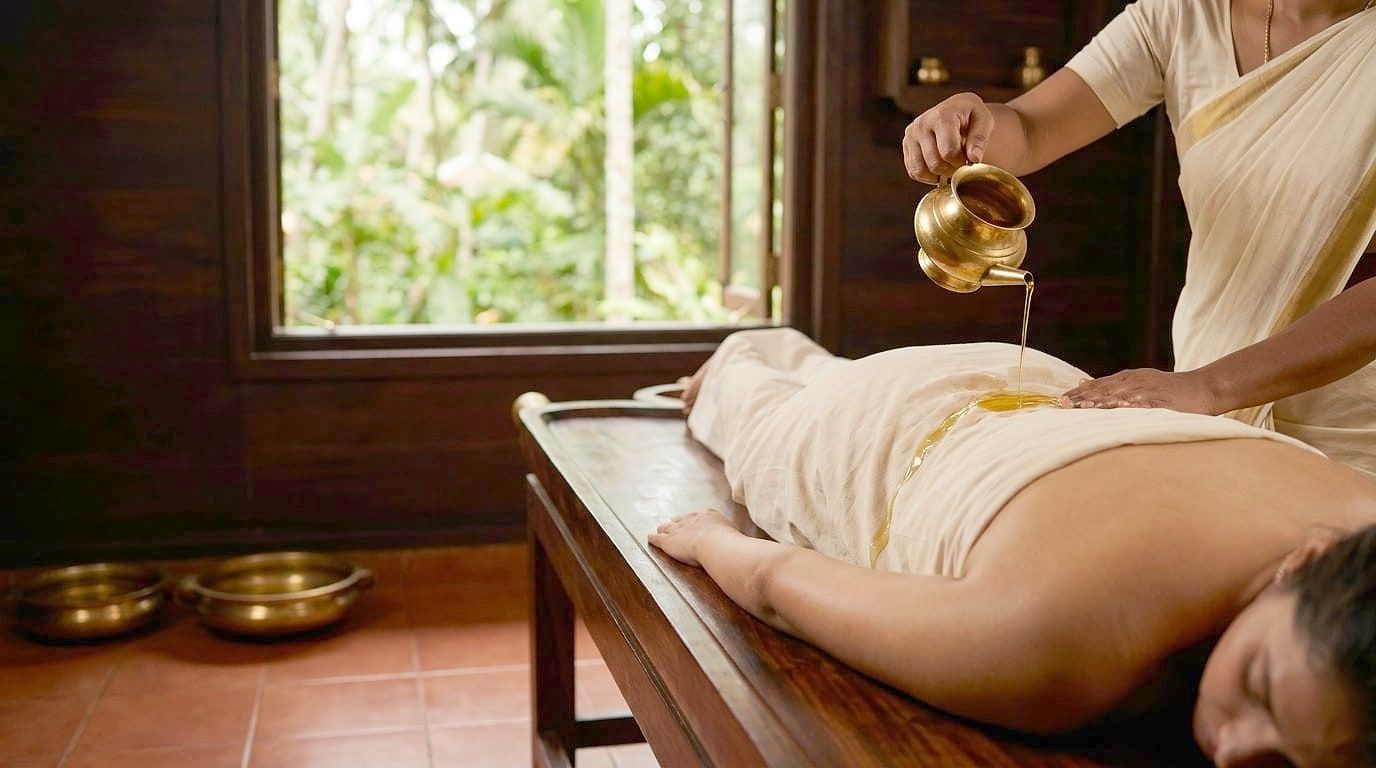
Ayurvedic massage is massage with warm oil chosen for the person’s condition: their constitution, the season and whatever is currently out of balance. In Ayurveda it is not a stand-alone service but part of body care. The Charaka Samhita puts oil on the body, head, ears and feet on a par with other daily rules — cleaning the teeth and bathing.
The main type of Ayurvedic massage is abhyanga, applying warm oil to the whole body in a set sequence. There are also head, face and foot massages, a dry powder rub and treatments with herbal poultices. Below: how all of this differs from classic massage and how to tell that you are getting a genuine Ayurvedic treatment.
The same treatment is often called Indian massage or Indian oil massage — after the country Ayurveda comes from and the oil that is central to it. There is no separate technique behind these names, and you should look for the same things: is the oil chosen for the person, and are you asked how you feel before the session.
How it differs from classic massage
Classic massage works with the muscles: kneading, friction, pressure. In Ayurvedic massage what matters is the oil and the sequence, not force.
- The oil is the active ingredient. It is warm and medicated, not just a lubricant for the hands. Vasant Lad’s school describes a simple logic: heavy, warming sesame oil when vata needs calming, cooler oils for pitta, light and warming oils in small amounts for kapha.
- Matched to the person. Oil, pressure, pace and duration depend on prakriti — the inborn constitution — and vikriti, the current state. The same treatment for everyone is not Ayurveda.
- Linked to routine and diet. The massage is built into the daily routine and a course. Afterwards you are advised warmth, rest and light food, not a return to your usual pace.
- Marmas. Ayurveda describes marmas — sensitive points of the body where muscles, vessels, ligaments, bones and joints meet. The Sushruta Samhita counts 107 marmas and describes them primarily as places where injury is dangerous. In massage they are worked gently. Siddha, the Tamil medicine of southern India, has its own teaching on such points: there they are called varmams, they number 108, and its therapeutic massage is called thokkanam.
Types of Ayurvedic massage
- Abhyanga. Warm oil over the whole body, seven positions, strokes in the direction of hair growth. A detailed guide is in the article on abhyanga.
- Shiro abhyanga — head massage. Oil is worked into the scalp, along with the neck and shoulders. According to the Charaka Samhita, regular oil on the head protects the hair and supports sound sleep.
- Mukha abhyanga — face massage. A light oil massage of the face, often combined with a head massage. The pressure here is the gentlest.
- Pada abhyanga — foot massage. The Charaka Samhita describes it separately: oil on the feet relieves dryness, roughness, tiredness and numbness of the legs.
- Udvartana. A dry rub with herbal powder from the bottom up, against the hair growth. It is used for kapha conditions — more in the article on udvartana.
- Kizhi. Warming the body with hot poultices of herbs, rice or powders — see the article on kizhi.
- Pizhichil. Warm oil is poured continuously over the body while it is massaged — see the article on pizhichil.
Next to the massages stands shirodhara — a thin stream of warm oil on the forehead. It is not a massage, but it is often done on the same day, after abhyanga.
How a session goes
Before the session the therapist asks how you feel: temperature, digestion, blood pressure, chronic illness, pregnancy, your cycle. In a clinic the treatment is prescribed by a doctor after an examination. The oil is warmed in a water bath and its temperature checked on the hand — it should be pleasantly warm, not hot.
You lie on a wooden table called a droni. Usually the work begins with the head, ears and feet: the Ashtanga Hridaya singles these out as the most important places for oil. Then the oil is applied to the whole body in sequence, changing positions. After the treatment you rest, excess oil is wiped off with a warm cloth, then a warm shower. The oil is never washed off with cold water.
After the massage, warmth, heaviness in the body and drowsiness are normal. For the rest of the day it is best to stay warm and eat light, warm food.
How much it costs and what drives the price
There is no single figure: the price of an Ayurvedic massage varies widely. It is more useful to explain what goes into it.
- Is there a doctor’s examination? A treatment prescribed after a consultation costs more than a massage from a spa menu — and they are different services.
- Which oil? Medicated oils cooked with herbs cost more than plain sesame, and a full-body treatment uses a lot.
- How many therapists? In Kerala practice abhyanga is often done by two therapists, in sync from both sides.
- Type and duration. A foot massage and a full abhyanga with the head are different amounts of work.
- Single session or a course? Ayurveda works with a series of treatments, and courses are usually priced separately.
If the price is far below the market, ask which oil is used and who performs the treatment.
Who should avoid it
The Ashtanga Hridaya names three main cases when oil massage is not done: with excess kapha, straight after cleansing procedures and with indigestion. Lad’s school adds that when there is a lot of ama — undigested matter — in the body, oil is contraindicated and a dry rub is chosen instead. In practice Ayurvedic massage is not given:
- With a fever, chills or an acute infection.
- With indigestion, nausea, diarrhea, or straight after eating.
- With pronounced kapha conditions — severe congestion, swelling, a cough with phlegm.
- On inflamed, broken or infected skin in the massage area.
- With blood clots or clotting disorders — a general restriction for any massage.
- During pregnancy — only on a doctor’s prescription and under supervision.
With cancer, after surgery or injury, the decision is made by a doctor. This article does not replace a consultation.
How to recognize a genuine Ayurvedic massage
At a spa “Ayurvedic” is often used for any relaxing massage with a fragrant oil. It may be pleasant, but it is a different service. Signs of a genuine treatment:
- You are questioned before the session and may be turned away if there are contraindications.
- The oil is warm and chosen for you, not one for everyone; you can be told which oil and why.
- There is a sequence: body positions, direction of strokes, separate work on the head and feet.
- The pressure is moderate, without pain or deep muscle work.
- There are no medical promises. Ayurvedic massage cannot “flush out toxins in one session” or “cure” anything, and a good therapist does not say so.
On the difference between spa and Ayurveda in general, see Spa vs Ayurveda: what’s the difference. Which Ayurvedic treatments can go on a spa menu and how a ritual differs from a treatment is covered in Ayurvedic treatments in the spa. How treatments are grouped — oil, heat, local, cleansing — is explained in Ayurvedic treatments: types and how they differ.
Where to learn Ayurvedic massage
If you are a spa therapist, massage therapist or beauty therapist, you can master Ayurvedic massage as a professional skill. At Ayurvedashala it is taught hands-on in a clinic in Malabar, northern Kerala: abhyanga, head, face and foot massage, warming and choosing oils, client intake and the contraindications that in a spa, without a doctor, you have to assess yourself. The program for professionals is on the Ayurvedic massage for spa therapists page, and all the school’s courses are in the Training section.
Sources
- Charaka Samhita, Sutrasthana, chapter 5 'Matrashitiya': oil on the head, in the ears, on the body and on the feet (Charak Samhita Online)
- Ashtanga Hridaya, Sutrasthana, chapter 2 'Dinacharya': abhyanga and when to avoid it (English summary, Easy Ayurveda)
- The Ayurvedic Institute (Vasant Lad's school). Basis of Healing Principles in Ayurvedic Massage Therapy
Frequently asked questions
Is Ayurvedic massage the same as abhyanga?
Abhyanga is the main and best-known type of Ayurvedic massage: warm oil over the whole body in a set sequence. But Ayurvedic massage also includes head, face and foot massage, the udvartana powder rub and kizhi poultice treatments.
Which oil is used for Ayurvedic massage?
The base is usually sesame oil. In a clinic medicated oils cooked with herbs are more common, chosen for the person's condition and the season. More in the article on massage oils.
How long does an Ayurvedic massage session last?
A full-body abhyanga with head, feet and rest afterwards usually takes up to an hour. A head or foot massage on its own is shorter. The exact time depends on the type of treatment and the prescription.
Can I have an Ayurvedic massage when I have a cold?
Not with a fever, chills or any acute infection. Ayurveda does not recommend oil massage in that state; it is postponed until you recover.
Is Indian Ayurvedic massage the same thing?
Yes. 'Indian massage' and 'Indian oil massage' are everyday names for the same treatment: Ayurveda comes from India, and oil is central to it. There is no separate technique behind these names, and you should judge them by the same signs — is the oil chosen for you, and are you asked questions before the session.
Does Ayurvedic massage hurt?
No. Pressure in oil massage is moderate; the hand carries the oil rather than pressing into the muscles. If it hurts, that is a mistake in technique, and you should say so straight away.
Message us
We reply personally, tell you more and help you choose the program and dates. The message is pre-filled — just press Send.
We usually reply within a few hours.